
H Street groups book Charter Bus Rental when they need one vehicle to handle people, timing, and curbside loading in Washington DC.
Rooted in the Capital - DC-Metro Group Transportation
District Charters dispatches every ride from our DC-metro hub. We know I-395 HOV rules and I-495 rush patterns, the Kennedy Center curbside window on concert nights, the Nats-day M Street SE closures around Nationals Park, the Arlington Cemetery credentialing routine, the Wolf Trap concert-shuttle rhythm, and the IAD/DCA/BWI baggage-claim wait math. That's how we quote realistically - no surprise fees when your driver misjudges GW Parkway or I-66 evening rush.
Overview: Charter Bus Rental in H Street
H Street in Washington DC is not a generic downtown pickup zone; it is the Atlas District, a nightlife and dining strip that sits east of Union Station and pulls in theatergoers, food-tour groups, wedding crowds, and late-night bar crawls. Charter Bus Rental here works best when the driver knows the neighborhood loading pattern, because curb space can disappear fast around Atlas Performing Arts, restaurant blocks, and event exits. Groups heading to or from the DC metro often use this corridor for private transfers to Nationals Park, Audi Field, Capital One Arena, and post-event hotel shuttles. The typical customer is a planner who wants one controlled vehicle instead of stacking rideshares across the District of Columbia. That is especially true when the group is coming from a corporate offsite, an association reception, or a university trip with a fixed departure time. On H Street, the trip is usually simple only after the staging plan is made specific.
H Street also works as a practical launch point for shuttle work that feeds into the wider DC metro area. Union Station is the anchor nearby, and that matters for guests arriving on Amtrak, MARC, or Metro before continuing to a venue on H Street or across Washington DC. The corridor also draws Union Market traffic, which means a lot of short-haul charter bus requests are really mixed-use trips with meal stops, tastings, and event space pickups. For weddings, the neighborhood is common for after-parties and hotel-to-reception transfers because groups want one vehicle waiting while the schedule shifts. For government-agency transport, the emphasis is usually on punctuality, secure manifest handling, and a bus that can move cleanly between the District of Columbia and nearby Maryland or Northern Virginia stops. That blend of nightlife, event space, and transit access makes H Street a different booking environment than a quiet residential neighborhood.
For multi-stop itineraries, H Street charter bus planning often stretches well beyond the block where the bus boards. A morning corporate shuttle may start on H Street, swing through Capitol Hill or the Convention Center district, and then head out I-395 or I-66 for an offsite in Virginia. A wedding itinerary may start with hotel pickups in the District of Columbia, then continue to a ceremony, reception, and late-night drop at a H Street after-party venue. Tour operators also use H Street because it is close enough to Union Station for regional arrivals yet easy to connect to the National Mall, Kennedy Center, and other visitor anchors. The key pattern is that the bus needs to be scheduled around traffic, not around wishful thinking, because one late pickup can affect every downstream stop. That is why H Street groups usually book a charter bus when timing, comfort, and guest count all matter at once.
Fleet Options for Charter Bus Rental in H Street
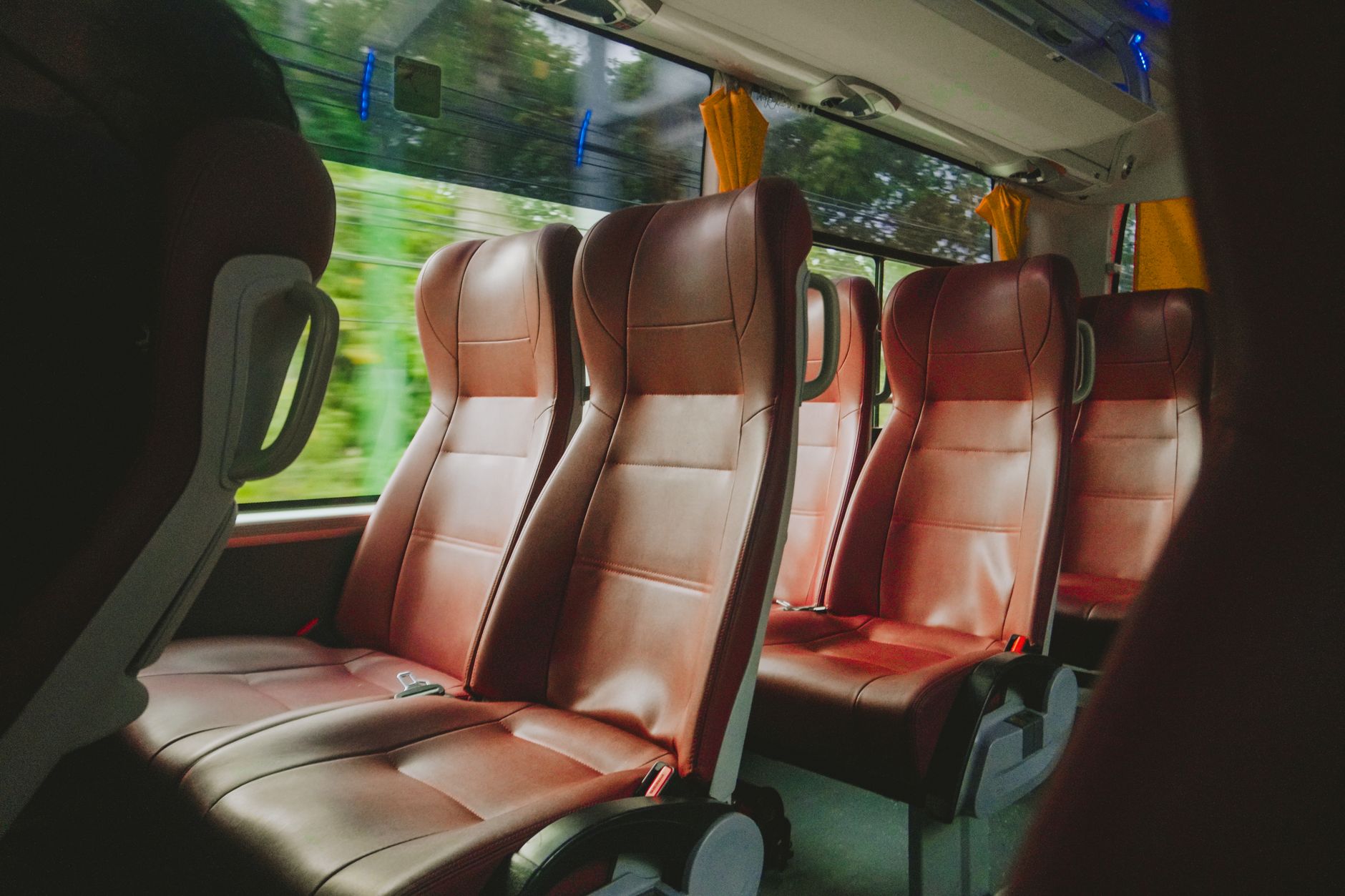
Choosing the right Charter Bus Rental for H Street starts with headcount, luggage, and how tight the schedule is in Washington DC. For 24 to 56 passengers, the right vehicle depends on whether the trip is a corporate shuttle, a wedding guest move, or a late-night Atlas District outing that needs extra aisle room and easy boarding. H Street and nearby Union Station can be awkward for oversized parking, so the safer the curb plan, the less stress on the driver and guests. If the route includes Union Market, Nationals Park, or a regional run toward Maryland or Northern Virginia, comfort and storage matter almost as much as seat count. The best fit is the bus that can board cleanly, clear local streets, and still feel comfortable after traffic on I-395 or I-495.
| Vehicle | Seats | Best For | Notes |
|---|---|---|---|
| 24 to 28 passenger mini coach | 24-28 passengers | Use this when your H Street group is compact and the trip stays mostly inside Washington DC or nearby neighborhoods in the DC metro area. | Good for smaller corporate shuttle work, wedding guest transfers, and short DC metro moves with light luggage. Its size is easier to stage near H Street, Union Station, and tight pickup points around the District of Columbia. |
| 30 to 35 passenger midsize coach | 30-35 passengers | Use this when your H Street itinerary includes several stops, extra bags, or a direct run to DCA, Convention Center hotels, or other DC destinations. | A strong balance of comfort, storage, and maneuverability for association meetings, university groups, and airport transfer work. It handles carry-ons better than a van and is still easier to place near urban curbs than a full-size coach. |
| 40 to 47 passenger coach | 40-47 passengers | Use this when the trip needs room for people plus gear and the schedule may extend beyond the District of Columbia. | A practical choice for wedding guest shuttles, government-agency transport, and medium-size conference groups moving in one load. It gives better aisle space and underbody storage for day trips to Baltimore, Annapolis, or stadium events. |
| 50 to 56 passenger full-size charter bus | 50-56 passengers | Use this when you want one vehicle for a full group and the trip includes longer highway legs on I-395, I-495, I-66, or routes toward BWI and IAD. | Best for large conference transfers, multi-day tours, and groups headed to major venues like Nationals Park, Audi Field, Capital One Arena, or regional conventions. This size is the most efficient when the headcount is high and the luggage load is real, but it needs the cleanest loading plan on H Street and around Union Station. |
Routing, Timing, and Local Realities
Routing from H Street in Washington DC depends on what time the bus enters or leaves the corridor and which highway the trip is using afterward. Eastbound and northbound travel can get tangled with Union Station access, while outbound trips toward Maryland often feel the pressure of I-495, the Wilson Bridge, and regional event traffic. Westbound moves toward downtown need extra buffer when the schedule crosses the National Mall, Convention Center area, or the Kennedy Center concert window. If the itinerary includes a game or concert, the driver should assume slower load times and a more deliberate pull-off than a suburban coach trip. That is especially true when guests are leaving Atlas District bars or a performance at Atlas Performing Arts. For a charter bus, the safest plan is usually to stage early and let the group finish on time instead of trying to recover minutes on the street.
Traffic planning matters just as much when the bus is headed to airports or stadiums from H Street. DCA is typically the most direct airport transfer from central Washington DC, while IAD usually requires more time for the I-66 corridor and BWI often adds highway miles that change the trip economics. If the trip is to Nationals Park or Audi Field, the coach should expect event-day closures, security controls, and more difficult curb access than a normal weekday transfer. For Capital One Arena or the Convention Center, evening traffic can stack up around loading zones and rideshare spillover, so a pre-arranged meet point is worth more than a flexible one. If the route pushes into Northern Virginia, I-395 and the GW Parkway can be helpful or restrictive depending on the direction, time of day, and the exact drop sequence. H Street is easy to describe on paper, but not every block is easy for a 56-passenger bus to occupy, so the route has to be written with loading reality in mind.
What This Typically Costs
Charter Bus Rental pricing in the DC-metro area usually starts with a 5-hour minimum, then adds hourly overtime if the schedule runs long and per-mile charges once the trip leaves the core service area. In the District of Columbia, short local moves around H Street, Union Station, the National Mall, or Convention Center conventions are usually priced differently than regional runs to Annapolis, Baltimore, Fairfax, Loudoun, Prince William, or Montgomery County. Multi-day itineraries commonly add driver overnight, deadhead miles, tolls, parking, and fuel adjustments, especially when the charter bus crosses I-495, heads down I-95 toward Maryland, or extends to BWI, IAD, or beyond the DC metro. Peak demand periods like cherry blossom season, wedding-season Saturdays, prom weekends, inauguration, and major game days can tighten availability and push rates higher. Industry quotes in the District of Columbia also often include line items for chauffeur gratuity, venue loading time, staging, and special event parking. The cleanest way to compare bids is to send the same trip details to each charter bus operator so the rate structure is apples to apples.
What H Street Customers Usually Ask
How do we stage a charter bus on H Street without making the route messy?
For most H Street trips, a charter bus makes the most sense once your group is large enough to fill a midsize coach or when you need everyone to arrive together for Atlas Performing Arts, a Union Market event, or a wedding after-party. H Street is dense, with curb space that can be tight near bars and venues, so a proper charter bus is easier to stage than multiple rideshares. For a bar crawl or late-night return in Washington DC, the driver can wait nearby while the group finishes the night. If the plan includes multiple stops around the District of Columbia, the same vehicle also avoids splitting the group across separate cars.
Where should our group load for an H Street charter bus trip?
The easiest pickup points are usually near wider curbs close to Union Station, on side streets with safer loading windows, or at pre-arranged lots that can handle a coach. H Street itself can be busy with restaurant traffic, scooters, delivery vehicles, and the streetcar corridor pattern, so the driver usually needs a tight arrival window and a clear marshal point. For Atlas District events, it often works better to board just off the main strip and roll in after everyone is seated. That approach is especially useful in the District of Columbia when the schedule includes a quick turn to Nationals Park, Audi Field, or the Convention Center.
What size charter bus fits a typical H Street group?
For a corporate shuttle or conference transfer, a 24 to 31 passenger vehicle is often enough if the group is moving in waves and luggage is light. For weddings, university trips, or association outings with bags, a 38 to 56 passenger charter bus gives more breathing room and keeps the aisle from getting crowded. H Street event guests often book upsize coaches because the nightlife strip, Union Market, and nearby hotel clusters create staggered return times. In the DC metro, comfort matters because traffic on I-395, I-495, and I-66 can turn a short ride into a long one.
Should we choose a party bus or a charter bus for H Street?
Yes, a party bus can be a better fit for H Street bar crawls, wedding after-parties, and celebratory rides where the vehicle itself is part of the experience. A charter bus is usually the better choice for corporate shuttle work, government-agency transport, school and university groups, or longer regional transfers across the DC-metro area. If the itinerary includes strict arrival times, luggage, or a multi-stop conference loop, the charter bus is usually easier to manage than a lounge-style vehicle. Around Washington DC, the right choice depends less on the party and more on whether you need seats, storage, and disciplined timing.
Can a charter bus pick us up near Union Station for an H Street event?
For Union Station, the most practical coach staging is usually on the bus access areas tied to the station complex or at a nearby curbside location arranged in advance. That matters because H Street and the Atlas District sit close to a major rail and bus node, but the immediate curb can still be busy with pedestrians, deliveries, and rideshare drop-offs. If the group is connecting from Amtrak, MARC, or Metro, the driver should be told exactly which side of the station the pickup is on so the boarding point is obvious. In Washington DC, a precise meet point saves time more reliably than assuming the bus can simply stop at the door.
How much buffer time should we add for H Street traffic?
Yes, but the timing should be planned carefully because H Street traffic can stack up quickly around dinner rush, venue dismissals, and weekend nightlife. If the schedule also touches GW Parkway, I-395, I-495, I-66, or the Wilson Bridge corridor, a small delay can snowball into a much longer return. For airport transfers, DCA is usually the easiest airport for a H Street charter bus, while IAD and BWI need more buffer because of distance and regional congestion. The best practice in the District of Columbia is to build in extra load time before the event ends so the coach is already in position when the group is ready.
What changes when our H Street charter bus becomes a multi-day trip?
Multi-day trip pricing usually adds driver overnight costs, deadhead miles, and fuel-related adjustments on top of the base charter bus time. That is common for tours that start on H Street and then continue to Baltimore, Annapolis, Richmond, Shenandoah, or regional college towns. The quote can also change if the bus must return empty after dropping the group off, because that return leg still counts as operating time and mileage. In the DC metro, the cleanest way to avoid surprises is to list every overnight stop, luggage expectation, and return date before the reservation is finalized.
How to Book Your Charter Bus Rental
To book, have the date, pickup address on H Street, passenger count, luggage notes, destination, and any return timing ready before you request a quote. For most Charter Bus Rental requests in Washington DC, a coordinator can usually turn around a clear estimate within about 4 business hours once the itinerary is complete. Your confirmation should spell out vehicle type, pickup window, route assumptions, wait time, and any overtime or mileage terms for the DC metro area. If the plan includes Union Station, Union Market, DCA, IAD, BWI, or a late-night return from the Atlas District, tell us upfront so the staging plan is built for real H Street traffic.
Related DC-Metro Transportation Pages
- Capitol Hill: Charter Bus Rental in Capitol Hill
- Navy Yard: Charter Bus Rental in Navy Yard
- Shaw: Charter Bus Rental in Shaw
- U Street: Charter Bus Rental in U Street
- Downtown DC: Charter Bus Rental in Downtown DC
- Other H Street services: H Street Party Bus Rental
- Other H Street services: H Street Wedding Shuttle
- Other H Street services: H Street Corporate Shuttle
- Other H Street services: H Street Sports Game-Day Shuttle
- Other H Street services: H Street Airport Transfer
- Other H Street services: H Street Prom Limo
- Other H Street services: H Street Funeral Procession
- Free quote: 60-second DC-metro group transportation quote